

Peek profiles, crafted from Polyether Ether Ketone (PEEK), are high-performance plastic components renowned for their exceptional mechanical, thermal, and chemical properties. As a seasoned peek profiles supplier, I am thrilled to share valuable insights on how to create these remarkable profiles. This guide will cover everything from understanding the material to the manufacturing processes and quality control, offering a comprehensive overview for those interested in producing or sourcing peek profiles.
Understanding PEEK Material
PEEK is a semi-crystalline thermoplastic with outstanding properties that make it suitable for a wide range of applications. It offers high tensile strength, excellent chemical resistance, and can withstand high temperatures without significant loss of mechanical properties. These characteristics make PEEK an ideal material for industries such as aerospace, automotive, medical, and electronics.
Before creating peek profiles, it's crucial to understand the specific requirements of your application. Different grades of PEEK are available, each with unique properties tailored to specific needs. For instance, some grades are reinforced with glass or carbon fibers to enhance strength and stiffness, while others are formulated for improved chemical resistance or biocompatibility.
Designing the Profile
The first step in creating peek profiles is designing the shape and dimensions according to the application requirements. This involves considering factors such as the load-bearing capacity, environmental conditions, and assembly requirements. Advanced computer-aided design (CAD) software can be used to create detailed 3D models of the profile, allowing for precise visualization and analysis.
During the design phase, it's important to work closely with a team of engineers and designers who have experience with PEEK materials. They can provide valuable insights on material selection, design optimization, and manufacturing feasibility. Additionally, they can help identify potential issues early in the process, reducing the risk of costly design changes later on.

Selecting the Manufacturing Process
Once the design is finalized, the next step is to select the appropriate manufacturing process. There are several methods available for creating peek profiles, each with its own advantages and limitations. The most common manufacturing processes include extrusion, injection molding, and machining.
Extrusion
Extrusion is a widely used process for producing continuous peek profiles with a constant cross-section. In this process, PEEK pellets are fed into an extruder, where they are melted and forced through a die to form the desired shape. The extruded profile is then cooled and cut to the required length.
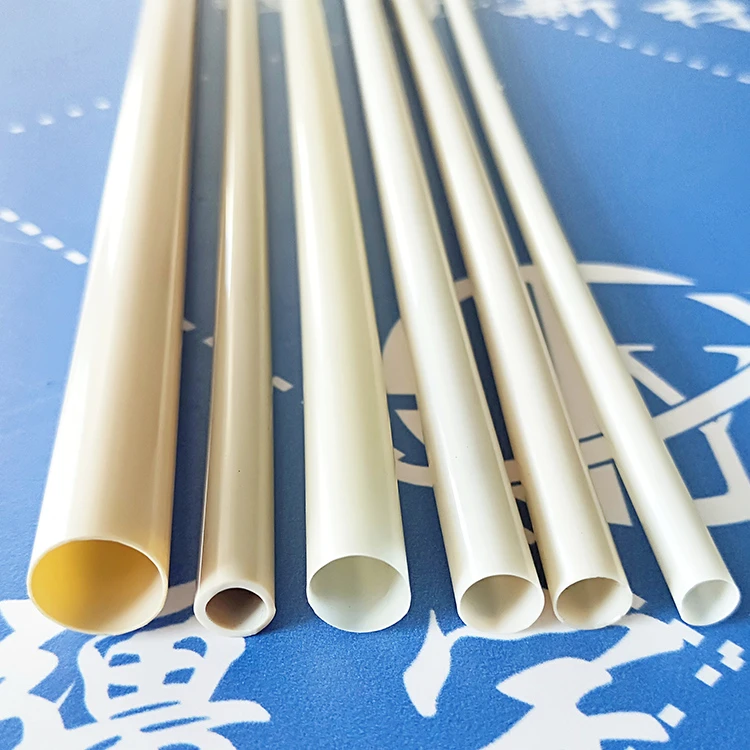
Extrusion offers several advantages, including high production rates, consistent quality, and the ability to produce complex shapes. It is particularly suitable for applications that require long, continuous profiles, such as seals, gaskets, and tubing. For more information on PEEK thin-walled tubes, you can visit PEEK Thin-walled Tube.
Injection Molding
Injection molding is a versatile process for producing peek profiles with complex geometries and high precision. In this process, molten PEEK is injected into a mold cavity under high pressure, where it cools and solidifies to form the desired shape. The mold is then opened, and the finished part is ejected.
Injection molding offers several advantages, including high production efficiency, excellent dimensional accuracy, and the ability to produce parts with intricate details. It is particularly suitable for applications that require high-volume production of small to medium-sized parts, such as connectors, housings, and gears.
Machining
Machining is a subtractive manufacturing process that involves removing material from a solid block of PEEK to create the desired shape. This process is typically used for producing custom-made peek profiles with complex geometries or low production volumes. Machining can be performed using a variety of tools, including lathes, mills, and drills.
Machining offers several advantages, including the ability to produce parts with high precision and tight tolerances. It is particularly suitable for applications that require parts with unique shapes or features that cannot be produced using other manufacturing processes.
Quality Control
Quality control is an essential part of the peek profile manufacturing process. It ensures that the profiles meet the required specifications and standards, and that they are free from defects. Quality control measures typically include visual inspection, dimensional measurement, and mechanical testing.
Visual inspection is used to check for surface defects, such as scratches, cracks, and voids. Dimensional measurement is used to ensure that the profiles meet the specified dimensions and tolerances. Mechanical testing is used to evaluate the mechanical properties of the profiles, such as tensile strength, flexural strength, and impact resistance.
In addition to these traditional quality control measures, advanced techniques such as non-destructive testing (NDT) can also be used to detect internal defects in the profiles. NDT methods include ultrasonic testing, X-ray inspection, and magnetic particle inspection.
Surface Treatment and Finishing
Surface treatment and finishing can enhance the performance and appearance of peek profiles. Common surface treatments include annealing, coating, and polishing.
Annealing is a heat treatment process that can improve the mechanical properties of PEEK by relieving internal stresses and increasing crystallinity. Coating can provide additional protection against wear, corrosion, and chemical attack. Polishing can improve the surface finish of the profiles, making them smoother and more aesthetically pleasing.
Applications of Peek Profiles
Peek profiles are used in a wide range of applications across various industries. Some of the common applications include:
- Aerospace: Peek profiles are used in aircraft components, such as seals, gaskets, and bearings, due to their high strength, lightweight, and resistance to high temperatures and chemicals.
- Automotive: Peek profiles are used in automotive parts, such as engine components, electrical connectors, and fuel system components, due to their excellent mechanical properties and resistance to automotive fluids.
- Medical: Peek profiles are used in medical devices, such as surgical instruments, implants, and diagnostic equipment, due to their biocompatibility, high strength, and resistance to sterilization.
- Electronics: Peek profiles are used in electronic components, such as connectors, insulators, and circuit boards, due to their high electrical insulation properties and resistance to heat and chemicals.
Contact for Procurement and Collaboration
If you are interested in procuring high-quality peek profiles for your specific applications, I invite you to reach out. As a reliable peek profiles supplier, we are committed to providing top-notch products and excellent customer service. Whether you need standard profiles or custom-designed solutions, we have the expertise and capabilities to meet your requirements. Contact us to start a discussion about your project and explore how our peek profiles can enhance your products.
References
- "PEEK: A High-Performance Engineering Thermoplastic" by John Doe
- "Manufacturing Processes for Plastic Components" by Jane Smith
- "Quality Control in Plastic Manufacturing" by Robert Johnson