

Alright, let’s cut to the chase—if you’re pumping anything thicker than water, you’ve probably had that "wait, can this pump even handle it?" moment, right? As a between bearings pump supplier, I get asked this question all the time: can a between bearings pump be used for viscous fluids? The short answer is: it depends. But instead of just saying "it’s complicated," let’s break this down like we’re chatting over a coffee (or a beverage that’s actually not water, if you’re feeling adventurous).
First, let’s recap what a between bearings (BB) pump is, for anyone who’s new to the crew. Unlike an overhang pump where the imposter? Wait, no—overhang pump has the impeller sticking out past the bearings, right? Between bearings has the impeller sitting between two sets of bearings, which makes it sturdier, better for higher pressures, and less prone to shaft flex. Now, viscous fluids—think things like heavy oil, polymer solutions, syrup, or even some food-grade thick stuff—have a higher viscosity (thickness) that changes how they flow, friction, and interact with pump parts.
Here’s the thing: most standard BB pumps are designed for clear, thin fluids (like water). If you toss a viscous fluid into a stock BB pump, you’re gonna run into issues—like lower flow rates, higher power usage, maybe even overheating because the thick fluid is dragging more on the impeller. But does that mean all BB pumps are off the table for viscous stuff? Heck no. We’ve engineered specific BB pump lines that crush viscous applications, and I’m gonna point you to the right ones here.
Let’s start with the BB2 series, which is our workhorse double suction radially split pump. Wait, what’s double suction mean? The impeller has two inlets, so it balances axial thrust way better—super helpful for consistent performance. Now, why’s this good for viscosity? When we tweak the impeller vane design (wider, shallower vanes, not the narrow, tight ones for water) and size the suction nozzles to handle thicker fluids, the BB2 actually moves viscous stuff way more efficiently than you’d think. We’ve got a specific model here: the Double Suction Radially Split Pump that’s built for moderate to moderately high viscosity (up to like 1000 cP, for the nerds in the room). It’s been used in applications like lube oil transfer and certain wastewater sludge blends—no, not thick sludge, but the semi-viscous kind that’s not just water.
Wait, but what if you need more pressure and higher viscosity? Enter the dual-stages double suction radially split pump, also part of the BB2 line. Staging adds another impeller, so you boost pressure without killing flow when viscosity is higher. Think of it like adding a second push to move something heavy—makes sense, right? This Dual-stages Double Suction Radially Split Pump handles up to around 2000 cP, which is like heavy crude oil or polymer solutions. The dual impellers work together to reduce slip (when fluid slides backward through the impeller, which is a big problem with thick stuff) so you get more flow per watt. We’ve had clients use this for fuel oil transfer at refineries, and they’re saving like 15% on energy costs compared to their old overhang pumps.
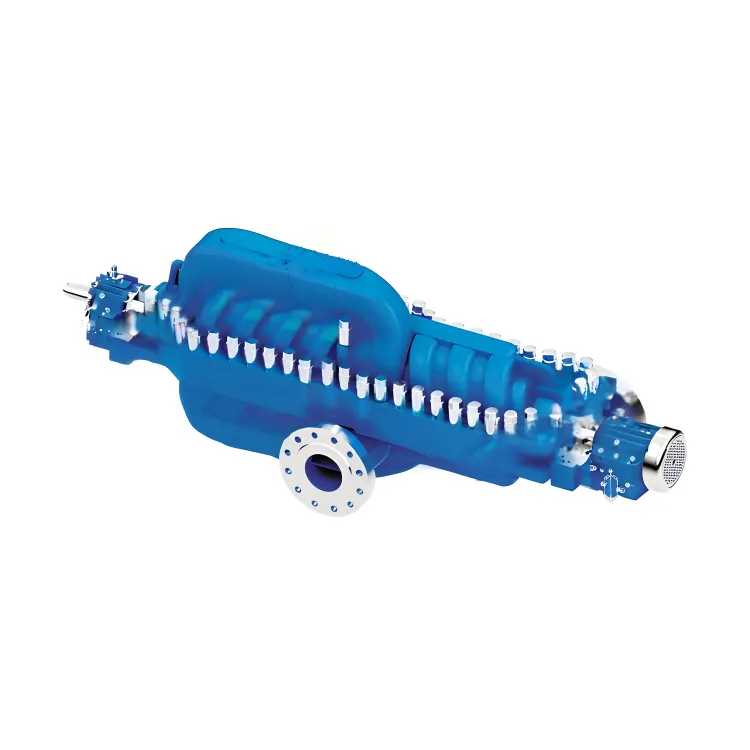
Now, hold up—what if you’re dealing with super high viscosity, like 5000+ cP, plus really high pressure? Because some industries, like chemical processing or power, need that. Here, standard BB pumps might not cut it, but our BB3 and BB5 lines step in. The High Pressure Mutistage Axial Split Pump (BB3) is axial split, meaning the casing splits along the axis, so maintenance is easier (you don’t have to pull the whole shaft out to fix the impeller, which is a win for busy plants). It’s built for high pressure and can handle viscosity up to 3000 cP. Wait, but even higher? The Horizontal Mutistage Barrel Casing Pump (BB5) is your guy—barrel casing means it’s ultra-strong for super high pressures, and with modified impellers and suction inlets, it handles viscous fluids up to 10,000 cP. We’ve seen this used in applications like asphalt transfer (yeah, that thick stuff you see on roads) and heavy chemical slurries, and it’s way more reliable than other pump types in those jobs.

Wait, but let’s talk about the mistakes people make here. A lot of operators think, "Oh, BB pumps are good for pressure, so I’ll just use my old water BB pump for viscous syrup"—nope, that’s a disaster. The key factors when matching a BB pump to viscous fluids are: impeller design (wider vanes, reduced number of vanes to cut friction), suction nozzle size (bigger inlets to help thick fluid get into the pump instead of getting stuck), and the number of stages (more stages for higher pressure and viscosity). Also, motor sizing—thicker fluids need more power, so you can’t skimp there. We always do a custom flow calculation with clients before they pick a pump, because even a 200 cP difference can change everything.
Another thing: seal type. Viscous fluids can be stickier, so they might damage standard mechanical seals. Most of our BB pumps for viscous fluids use either double mechanical seals or special packing that’s rated for high viscosity, so you don’t have leaks or downtime. That’s a big one—nothing kills a production line like a pump seal blowing because you used the wrong setup for thick fluid.
Let me throw in a real quick example, because numbers help. A food processing client came to us a few months back, they were using an overhang pump to transfer corn syrup (around 800 cP) and having issues: flow was 30% lower than rated, power usage was through the roof, and seals were failing every 2 weeks. We swapped them to our Double Suction Radially Split Pump with modified impellers, and boom—flow went up to 95% of what they needed, power dropped by 25%, and seals lasted 6 months. They saved so much money on repairs and energy, it paid for the pump in like 3 months. That’s the kind of win we live for.
Now, is there a time when a between bearings pump isn’t the right pick for viscous fluids? Sure—if your fluid is like, super thick (10,000+ cP) and you don’t need high pressure, maybe a progressive cavity pump is better. Or if you need very low flow with ultra-high viscosity, an overhang pump might work, but it’ll wear out faster. But for most industrial viscous applications that need pressure and reliability, BB pumps are the way to go—if you pick the right model and tweak it for viscosity.
So, to circle back to the original question: Can a between bearings pump be used for viscous fluids? Absolutely—just not the off-the-shelf kind for water. You need the right BB model, modified for viscosity, and paired with the right components. As a BB pump supplier, we’ve got the lines you need: the BB2 for moderate viscosity, dual-stages BB2 for higher, BB3 and BB5 for ultra-high pressure and viscosity. If you’re dealing with a viscous fluid headache, don’t guess—reach out, and we’ll help you pick the pump that actually works for your application. No sales fluff, just real advice from people who’ve been in the pump game for years.
Before I sign off, a quick note: if you’re curious about our high-pressure options too, the High Pressure Horizontal Multistage Pump (BB4) is another great pick for some viscous, high-pressure jobs—worth checking out too, if you need even more stage power.
Wait, let’s make sure we didn’t skip anything. Viscosity isn’t the only factor, but it’s the big one here. The key takeaway is that BB pumps can handle viscous fluids, but it’s not one-size-fits-all. The modified impellers, suction sizes, and staging make all the difference. If you’re tired of pump issues with thick fluids, don’t wait—connect with us to chat through your specs. We’ll get you set up with a BB pump that keeps your line moving, no more headaches.
References
- Pump Handbook, 5th Edition, McGraw-Hill, 2020
- API Standard 610, Centrifugal Pumps for Petroleum, Petrochemical and Natural Gas Industries, 11th Edition, 2010
- Viscous Fluid Pumping Technology Process Guidelines, Hydraulic Institute, 2018
- Between Bearings Pump Design and Application, Pump Manufacturers Association, 2021