

Yo, what's up folks! As a labyrinth seal supplier, I often get asked about how these seals work, especially in a gas environment. So, I thought I'd break it down for you in a way that's easy to understand, without all the fancy jargon.
Let's first talk about what a labyrinth seal is. It's a type of non - contacting seal that uses a series of grooves or teeth to create a tortuous path for the fluid (in our case, gas) to flow through. This design helps to reduce the leakage of gas from one area to another.
How the Sealing Mechanism Works
In a gas environment, the main idea behind the labyrinth seal's sealing mechanism is to disrupt the flow of gas and create a pressure drop along the seal path. When gas tries to pass through the labyrinth, it encounters these obstacles (the grooves or teeth).
As the gas enters the first cavity of the labyrinth seal, it expands. This expansion causes the gas to lose some of its kinetic energy. The gas then has to change its direction multiple times to move through the various passages in the seal. Each turn and expansion in the cavities further reduces the gas's pressure and velocity.
Imagine you're trying to run through a maze. Every time you have to make a sharp turn, you slow down a bit. The same thing happens to the gas in a labyrinth seal. The more complex the labyrinth design, the more twists and turns the gas has to go through, and the better the sealing effect.
There are two main types of labyrinth seals: straight - through and staggered. In a straight - through labyrinth seal, the passages are arranged in a more linear fashion. The gas flows more or less straight through the seal, but it still has to deal with the cavities and the pressure drops at each step.
On the other hand, a staggered labyrinth seal has a more complex structure. The teeth or grooves are offset from one another, creating an even more convoluted path for the gas. This design is often more effective at reducing gas leakage because it forces the gas to make more drastic changes in direction.
Factors Affecting the Sealing Performance
Now, there are several factors that can affect how well a labyrinth seal works in a gas environment. One of the most important factors is the clearance between the seal teeth and the mating surface. If the clearance is too large, the gas can easily bypass the obstacles and leak out. But if the clearance is too small, there's a risk of the seal rubbing against the surface, which can cause wear and even damage to the seal.
The pressure difference across the seal also plays a big role. The greater the pressure difference, the more force there is pushing the gas through the seal. So, in high - pressure applications, a more sophisticated labyrinth design may be needed to effectively reduce leakage.
The nature of the gas itself is another factor. Different gases have different viscosities and densities. For example, a lightweight gas like hydrogen will flow more easily through the seal compared to a heavier gas like carbon dioxide. So, the seal design may need to be adjusted depending on the type of gas being sealed.
Applications in the Real World
Labyrinth seals are used in a wide range of industries in gas - sealing applications. In the aerospace industry, they're used in jet engines to prevent the leakage of hot gases. The high - speed rotating components in jet engines require seals that can withstand extreme temperatures and pressures, and labyrinth seals fit the bill perfectly.
In the power generation industry, labyrinth seals are used in gas turbines. They help to maintain the efficiency of the turbine by preventing the leakage of high - pressure combustion gases. This means that more of the energy from the gas can be used to generate electricity, making the power plant more efficient.
We also supply labyrinth seals for industrial compressors. These seals help to keep the compressed gas within the compressor, minimizing losses and ensuring that the compressor operates at peak performance.

Related Products
While we're on the topic of seals and industrial components, I'd like to mention a few related products that might be of interest to you. If you're into electronics, you might want to check out Electronic Components. These components are essential for building and maintaining all kinds of electronic devices.
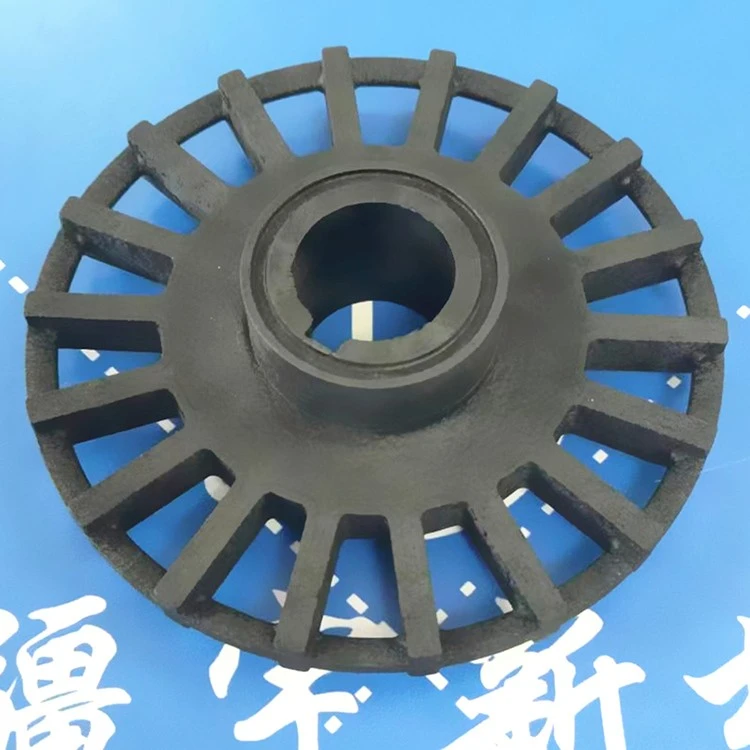
If you're in the water - pumping business, then the Water Pump Impeller is something you can't miss. It plays a crucial role in the efficiency of water pumps.
And for those who need to manage cables in an industrial setting, Cable Ties are a handy solution to keep your cables organized and secure.
Why Choose Our Labyrinth Seals
As a labyrinth seal supplier, we pride ourselves on offering high - quality products. Our seals are made from top - notch materials that can withstand the harsh conditions of gas environments. We have a team of experienced engineers who can design custom - made labyrinth seals to meet your specific requirements. Whether you're dealing with high - pressure gases, extreme temperatures, or unique geometries, we've got you covered.
Let's Talk Business
If you're in the market for labyrinth seals or have any questions about how they can be used in your application, don't hesitate to reach out. We're here to provide you with the best solutions and products. Contact us for a quote, and let's start a conversation about how we can work together to solve your sealing needs.
References
- Smith, J. (2018). Sealing Technology in Gas - Handling Equipment. Industrial Press.
- Brown, A. (2020). Advanced Labyrinth Seal Design for High - Performance Applications. Journal of Mechanical Engineering.
- Green, C. (2019). The Impact of Gas Properties on Labyrinth Seal Performance. Proceedings of the International Conference on Fluid Sealing.