

In the world of fluid mechanics and industrial machinery, water pump impellers play a pivotal role. As a trusted water pump impeller supplier, I've had the privilege of witnessing firsthand the significance of every component of these impellers, especially the vanes. In this blog, I'll delve into the functions of the vanes on a water pump impeller, exploring their mechanical and hydraulic roles, and highlighting their impact on the overall performance of the pump.
1. Introduction to Water Pump Impellers
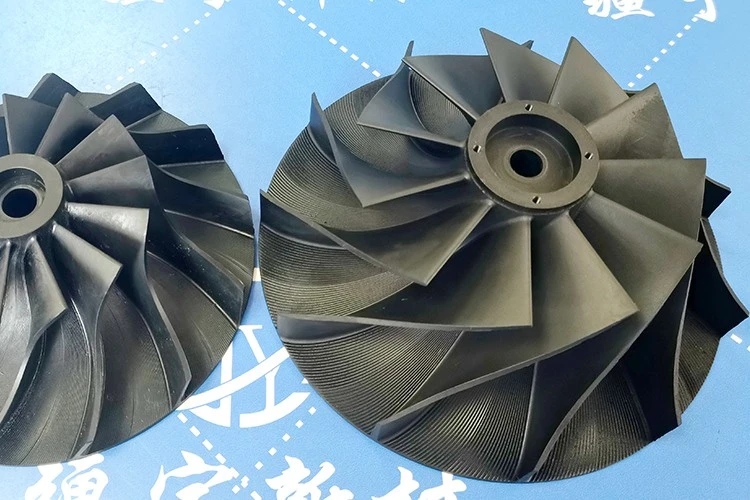
Before we dive into the functions of the vanes, let's briefly understand what a water pump impeller is. A water pump impeller is a rotating component of a pump that is designed to transfer energy to the fluid being pumped. It consists of a hub and a series of vanes that are arranged around the hub. The impeller is typically housed in a casing, and when it rotates, it creates a centrifugal force that moves the fluid from the center of the impeller to the outer edges, increasing the fluid's velocity and pressure.
2. Primary Functions of Impeller Vanes
2.1 Energy Transfer
The most fundamental function of the vanes on a water pump impeller is to transfer energy from the impeller to the fluid. When the impeller rotates, the vanes push against the fluid, causing it to move in a circular motion. This circular motion is then converted into linear motion as the fluid is forced out of the impeller and into the pump casing. The energy transfer process is based on the principle of centrifugal force, which states that an object moving in a circular path experiences an outward force. The vanes on the impeller act as a guide for the fluid, ensuring that it follows a specific path and that the energy transfer is efficient.
2.2 Flow Control
The vanes also play a crucial role in controlling the flow of the fluid through the impeller. The shape, number, and angle of the vanes can be designed to optimize the flow rate and pressure of the fluid. For example, a pump with a high number of vanes may be more suitable for applications that require a high flow rate, while a pump with fewer vanes may be better for applications that require a high pressure. Additionally, the angle of the vanes can be adjusted to control the direction of the fluid flow, which is important for ensuring that the fluid is delivered to the desired location.
2.3 Pressure Generation
Another important function of the vanes is to generate pressure in the fluid. As the fluid moves through the impeller, the vanes increase the velocity of the fluid, which in turn increases the pressure. The pressure generated by the impeller is essential for overcoming the resistance of the fluid in the system, such as the friction in the pipes and the elevation difference between the pump and the destination. The design of the vanes can be optimized to maximize the pressure generation, which is particularly important for applications that require a high-pressure output, such as in a fire suppression system or a water treatment plant.
3. Design Considerations for Impeller Vanes
3.1 Vane Shape
The shape of the vanes is one of the most critical design considerations for a water pump impeller. The vane shape can have a significant impact on the efficiency, performance, and reliability of the pump. There are several different types of vane shapes, including backward-curved, forward-curved, and radial vanes. Backward-curved vanes are the most common type of vane shape used in water pumps. They are designed to provide a high efficiency and a stable performance over a wide range of flow rates. Forward-curved vanes, on the other hand, are typically used in applications that require a high flow rate but a lower pressure. Radial vanes are used in applications that require a high pressure but a lower flow rate.
3.2 Vane Number
The number of vanes on an impeller can also affect its performance. A higher number of vanes generally results in a smoother flow of the fluid through the impeller, which can improve the efficiency and reduce the noise level of the pump. However, a higher number of vanes also increases the friction between the vanes and the fluid, which can reduce the efficiency of the pump. Therefore, the number of vanes needs to be carefully selected based on the specific requirements of the application.
3.3 Vane Angle
The angle of the vanes is another important design consideration. The vane angle can affect the flow rate, pressure, and efficiency of the pump. A pump with a larger vane angle may be more suitable for applications that require a high flow rate, while a pump with a smaller vane angle may be better for applications that require a high pressure. Additionally, the vane angle can be adjusted to optimize the performance of the pump at different operating conditions.
4. Impact of Vane Design on Pump Performance
The design of the vanes on a water pump impeller can have a significant impact on the overall performance of the pump. A well-designed impeller with properly shaped, numbered, and angled vanes can result in a pump that is more efficient, reliable, and durable. On the other hand, a poorly designed impeller can lead to a pump that is inefficient, noisy, and prone to failure.
4.1 Efficiency
The efficiency of a water pump is a measure of how effectively it converts the input power into useful work. A pump with a high efficiency will require less energy to operate, which can result in significant cost savings over time. The design of the vanes can have a major impact on the efficiency of the pump. For example, a pump with a well-designed impeller and vanes can reduce the amount of energy lost due to friction and turbulence, resulting in a higher efficiency.
4.2 Reliability
The reliability of a water pump is also affected by the design of the vanes. A pump with a robust impeller and vanes is less likely to experience mechanical failures, such as vane breakage or wear. The shape and material of the vanes can be designed to withstand the forces and stresses that are generated during operation, ensuring that the pump can operate continuously without interruption.
4.3 Durability
The durability of a water pump is another important factor to consider. A pump with a durable impeller and vanes will have a longer service life, which can reduce the need for frequent replacements and maintenance. The design of the vanes can be optimized to resist corrosion, erosion, and wear, ensuring that the pump can operate in harsh environments without degradation.
5. Applications of Water Pump Impellers with Different Vane Designs
Water pump impellers with different vane designs are used in a wide range of applications, each with its own specific requirements. Some of the common applications include:
5.1 Industrial Applications
In industrial applications, water pumps are used for a variety of purposes, such as cooling, lubrication, and process fluid transfer. Pumps with different vane designs may be used depending on the specific requirements of the application. For example, a pump with a high-pressure impeller may be used for applications that require a high pressure, such as in a hydraulic system, while a pump with a high-flow impeller may be used for applications that require a high flow rate, such as in a cooling tower.
5.2 Residential Applications
In residential applications, water pumps are used for tasks such as water supply, irrigation, and drainage. Pumps with different vane designs may be used depending on the size and type of the residential property. For example, a small pump with a low flow rate may be suitable for a single-family home, while a larger pump with a high flow rate may be required for a large estate or a commercial property.
5.3 Radome and Other Specialized Applications
In addition to industrial and residential applications, water pump impellers are also used in specialized applications, such as in the aerospace and semiconductor industries. For example, Radome applications may require pumps with specific vane designs to ensure that the fluid is delivered at a precise pressure and flow rate. Similarly, the Semiconductor Industry Application Products may require pumps with high precision and reliability to ensure the quality of the manufacturing process.

6. Our Offerings as a Water Pump Impeller Supplier
As a leading water pump impeller supplier, we offer a wide range of impellers with different vane designs to meet the diverse needs of our customers. Our impellers are manufactured using high-quality materials and advanced manufacturing techniques to ensure that they are of the highest quality and performance. We also offer customized impeller design services, allowing us to create impellers that are specifically tailored to the requirements of our customers.
In addition to our standard impeller offerings, we also offer High-speed Blower Impeller for applications that require high-speed operation. Our high-speed blower impellers are designed to provide a high flow rate and pressure at high speeds, making them suitable for a variety of industrial and commercial applications.
7. Conclusion and Call to Action
In conclusion, the vanes on a water pump impeller play a crucial role in the performance of the pump. They are responsible for transferring energy, controlling the flow, and generating pressure in the fluid. The design of the vanes can have a significant impact on the efficiency, reliability, and durability of the pump. As a water pump impeller supplier, we understand the importance of providing high-quality impellers with optimized vane designs.
If you are in the market for a water pump impeller or have any questions about our products, please don't hesitate to contact us. We are here to help you find the right impeller for your application and to provide you with the best possible service. Whether you need a standard impeller or a customized solution, we have the expertise and resources to meet your needs.
References
- Pump Handbook, 4th Edition, Karassik et al.
- Fluid Mechanics, 5th Edition, Frank M. White
- Centrifugal Pumps: Design and Application, 2nd Edition, Heinz P. Bloch