

In the realm of high - performance engineering plastics, Polyetheretherketone (PEEK) has emerged as a material of choice for a wide range of industries. As a PEEK products supplier, I am often asked about the chemical resistance of PEEK products. This blog post aims to delve into this topic, exploring the factors that contribute to PEEK's chemical resistance, its performance in various chemical environments, and the implications for different applications.
Understanding PEEK's Chemical Structure and Resistance Mechanisms
PEEK is a semi - crystalline thermoplastic polymer with a unique chemical structure. Its backbone consists of aromatic rings connected by ether and ketone linkages. This structure imparts several properties that contribute to its excellent chemical resistance.
The aromatic rings provide a high degree of stability due to their resonance structure. The delocalized electrons in the aromatic rings make them less reactive towards many chemical species. The ether and ketone linkages also play a crucial role. The carbon - oxygen double bond in the ketone group and the carbon - oxygen single bond in the ether group are relatively strong and not easily broken by common chemicals.
In addition, PEEK has a high melting point (around 343°C), which means it maintains its structural integrity at elevated temperatures. This is important because chemical reactions often occur more rapidly at higher temperatures. A material with a high melting point like PEEK can withstand the harsh conditions of chemical environments without significant degradation.
PEEK's Resistance to Different Chemical Classes
Organic Solvents
PEEK shows excellent resistance to a wide range of organic solvents. Aliphatic hydrocarbons such as hexane and heptane have little effect on PEEK. These non - polar solvents do not have the ability to dissolve or swell PEEK due to the non - compatibility of their chemical structures.
Aromatic solvents like benzene and toluene also pose no significant threat to PEEK. The aromatic nature of PEEK makes it less likely to interact with these solvents in a way that would cause damage. Even polar aprotic solvents such as dimethylformamide (DMF) and dimethyl sulfoxide (DMSO) have limited impact on PEEK at room temperature. However, at elevated temperatures and long exposure times, some minor swelling may occur, but the material still retains a large portion of its mechanical properties.
Acids and Bases
PEEK is highly resistant to many acids and bases. Inorganic acids such as hydrochloric acid (HCl), sulfuric acid (H₂SO₄), and nitric acid (HNO₃) do not corrode PEEK under normal conditions. For example, in dilute solutions of these acids at room temperature, PEEK can be used for extended periods without significant degradation.
When it comes to bases, sodium hydroxide (NaOH) and potassium hydroxide (KOH) also have little effect on PEEK. The high chemical stability of PEEK's structure allows it to withstand the alkaline environment. However, in extremely concentrated acid or base solutions and at high temperatures, there may be some surface erosion over time, but this is still much less compared to many other materials.
Oxidizing Agents
Oxidizing agents can be particularly aggressive towards many materials. However, PEEK shows good resistance to common oxidizing agents such as hydrogen peroxide (H₂O₂) and sodium hypochlorite (NaClO). The stable chemical bonds in PEEK make it difficult for the oxidizing agents to break them and cause oxidation.
Applications Benefiting from PEEK's Chemical Resistance
Chemical Processing Industry
In the chemical processing industry, PEEK products are widely used due to their chemical resistance. For example, Water Pump Impeller made from PEEK can handle a variety of corrosive fluids. The impeller needs to maintain its shape and mechanical properties while being in contact with chemicals. PEEK's resistance to acids, bases, and organic solvents ensures that the impeller has a long service life and reliable performance.
Analytical Instrumentation
Analytical Instrument Accessories often come into contact with various chemicals during the analysis process. PEEK is an ideal material for these accessories because it does not contaminate the samples and can withstand the chemical environment. For instance, in liquid chromatography, PEEK tubing is used to transport the mobile phase, which may contain a mixture of solvents and buffers. The chemical resistance of PEEK ensures that the tubing does not degrade and does not introduce impurities into the analysis.
Bearings and Sliding Components
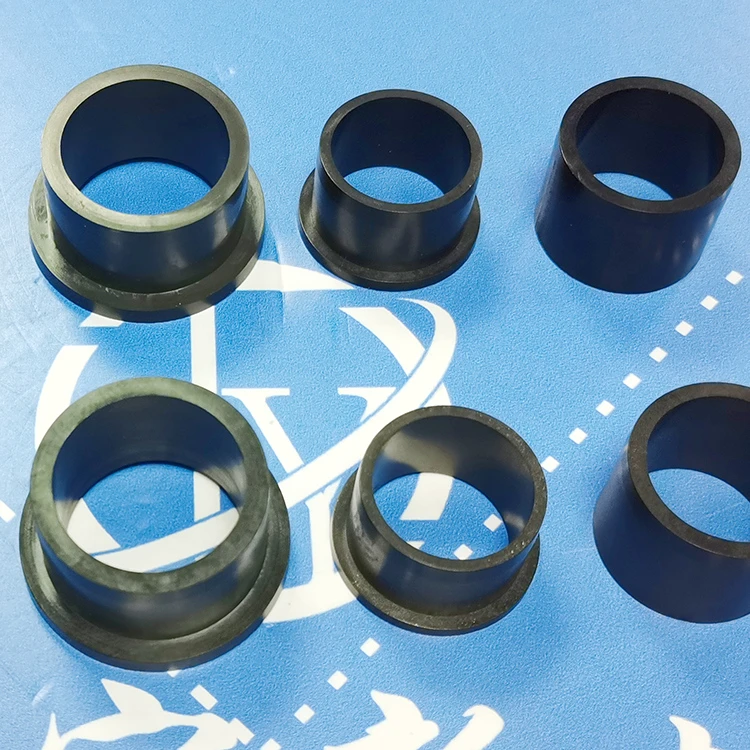
Self - lubricating Sliding Bearings made from PEEK are used in many industrial applications. These bearings may be exposed to lubricants, coolants, and other chemicals. PEEK's chemical resistance allows the bearings to operate smoothly without being damaged by these substances. The self - lubricating property of PEEK also reduces the need for additional lubricants, which can sometimes react with other components in the system.
Factors Affecting PEEK's Chemical Resistance
Although PEEK has excellent chemical resistance, there are several factors that can affect its performance in chemical environments.

Temperature
As mentioned earlier, temperature plays a significant role in chemical reactions. Higher temperatures can accelerate the reaction rate between PEEK and chemicals. For example, while PEEK is resistant to many solvents at room temperature, at elevated temperatures, the solubility and swelling behavior of PEEK may change. Therefore, when using PEEK products in high - temperature chemical environments, it is necessary to carefully evaluate the compatibility.
Exposure Time
The longer PEEK is exposed to chemicals, the more likely it is to experience some degree of degradation. Even though PEEK is highly resistant, continuous and long - term exposure to aggressive chemicals can gradually cause changes in its mechanical and physical properties. For critical applications, it is important to limit the exposure time or take appropriate protective measures.
Chemical Concentration
The concentration of chemicals also affects PEEK's chemical resistance. A highly concentrated chemical solution is more likely to cause damage to PEEK compared to a dilute solution. For example, a concentrated acid solution may have a more severe impact on PEEK than a dilute one. When designing applications, it is necessary to consider the concentration of the chemicals that PEEK will be exposed to.
Conclusion
In conclusion, PEEK products are generally highly resistant to a wide range of chemicals. Their unique chemical structure, high melting point, and stable chemical bonds make them suitable for use in many challenging chemical environments. From the chemical processing industry to analytical instrumentation and sliding components, PEEK's chemical resistance provides reliable performance and long - term durability.
However, it is important to note that the performance of PEEK in chemical environments can be affected by factors such as temperature, exposure time, and chemical concentration. Therefore, when selecting PEEK products for specific applications, a comprehensive evaluation of these factors is necessary.
If you are looking for high - quality PEEK products with excellent chemical resistance for your application, we are here to help. Our team of experts can provide you with detailed information and guidance on the most suitable PEEK products for your needs. Contact us to start the procurement negotiation and find the best solutions for your business.
References
- "Engineering Thermoplastics: Properties and Applications" by Donald V. Rosato, Dominick V. Rosato, and Joseph P. Grove
- "Plastics for Engineers: Properties, Selection, and Applications" by Richard A. Falcetta